
To make a warranty claim, keep the bill or invoice, the warranty terms, and the product's model and serial number from the day you buy. When something goes wrong, check the warranty hasn't ended, contact whoever gave it (the shop or the maker), describe the fault, and send copies while keeping the originals. If the claim is refused, ask for the reason in writing: a warranty adds to your legal rights as a buyer, it doesn't replace them.
Last checked 15 October 2026 against the sources listed at the end of this page.
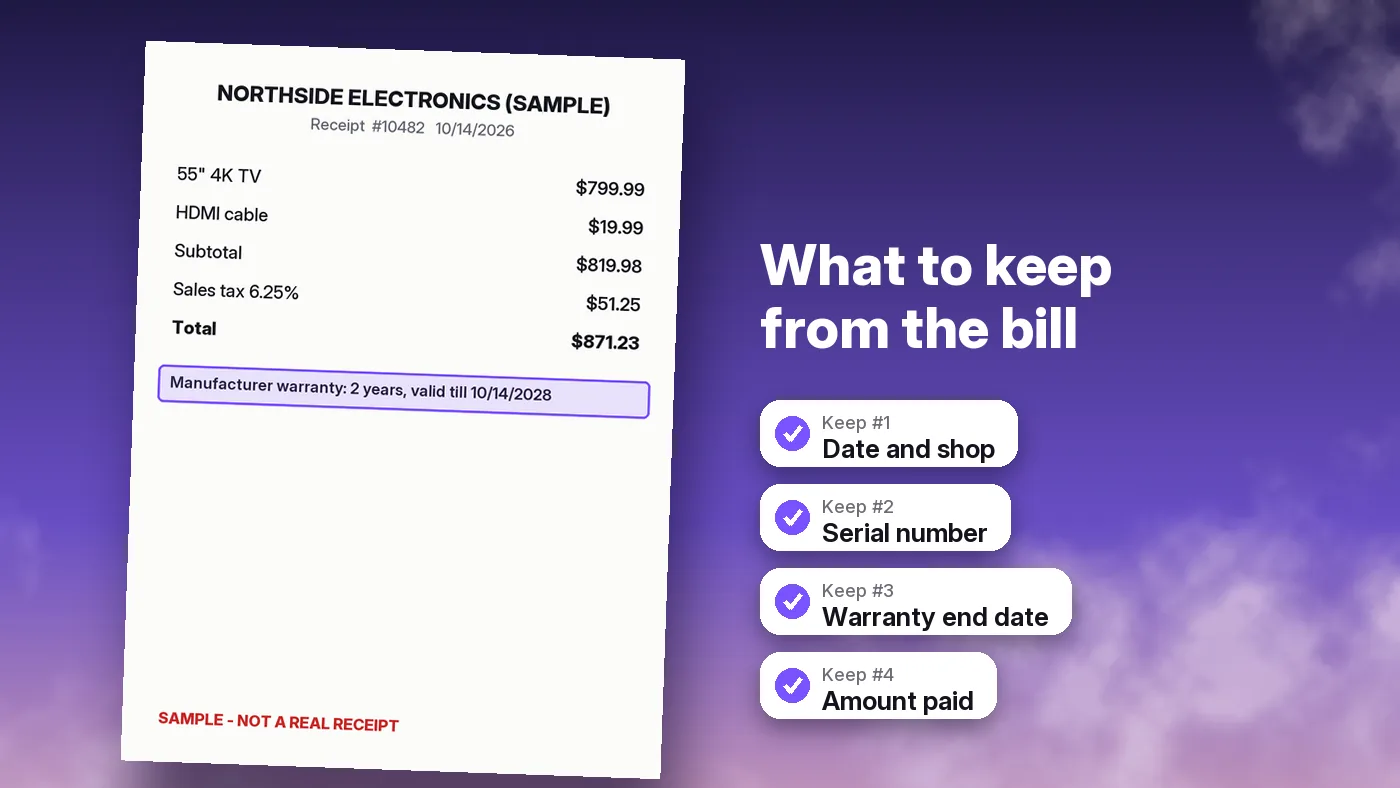
Keep these from the day you buy
- Proof of purchase. The bill or invoice showing where you bought it, when, and what you paid. A card or bank statement can help if the bill is lost, but the bill is easier.
- The warranty or guarantee itself. It may be printed on the bill, sent by email, or come as a leaflet in the box. It says how long cover lasts and what you're entitled to: repair, replacement or refund.
- The model and serial number. Usually on a sticker on the product or the box. Take a photo of it.
- Registration confirmation, if the maker asks you to register. Some guarantees aren't valid until you do.
- Delivery or installation date, for appliances that are fitted later. Some warranties count from that date, not the purchase date.
Bills printed on shiny till-roll paper often fade. Scan or photograph them early, while the date and amount are still readable.
How to make a claim
- Check you're still covered. Find the end date on the warranty and what it excludes (accidental damage and repairs by others are common exclusions).
- Contact the right party. A shop's warranty goes to the shop; a manufacturer's guarantee goes to the maker, even if the shop has closed. The paperwork or the maker's website has the contact details.
- Describe the fault clearly. When it started, what happens, and photos or a short note. Don't open or repair the product yourself first.
- Send copies, keep originals. Share a copy of the bill and the warranty. If they want the bill, the warranty and your photos of the fault in one attachment, our free JPG to PDF tool puts them into one PDF without uploading them. Keep a record of each call or email: the date, who you spoke to, and the reference number.
- Check the small print on costs. Some warranties make you pay postage or transport to send the item back.
If the claim is refused
Ask for the reason in writing. A warranty adds to your legal rights; it doesn't replace them. Depending on where you live, the seller may still have to deal with faulty goods after a warranty ends. In England, for example, you have legal rights for up to six years if there's a fault (five in Scotland), and they're usually easier to use in the first six months. In the US, implied warranties cover many products even without a written warranty, and in some states they last up to four years. If you can't settle it with the seller or maker, your country's consumer helpline or consumer body can advise you on the next step.
How DocIt helps
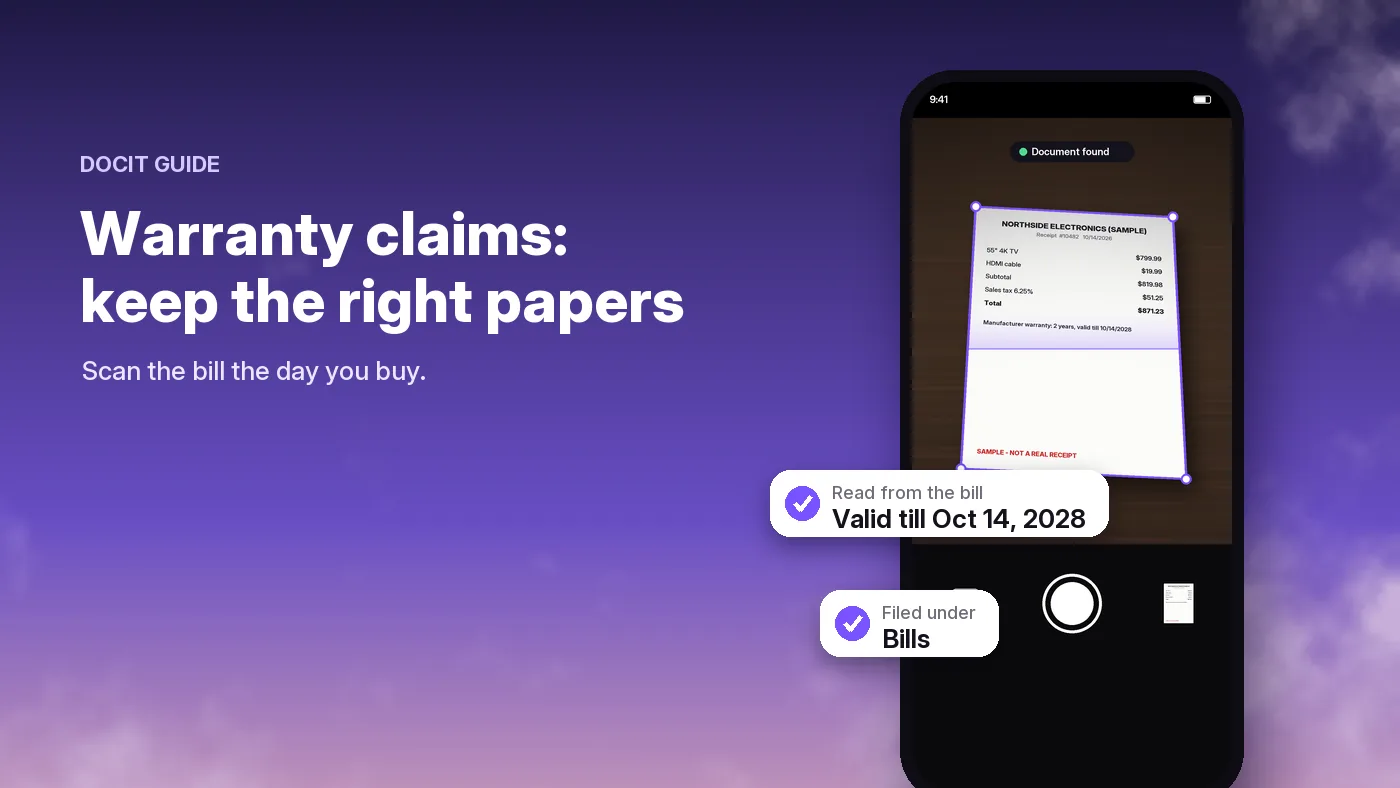
DocIt keeps your bills and warranty documents on your phone, encrypted, in one place. Receipts and bills have their own shelf. If a "valid till" or warranty date is printed on the document, DocIt reads that too, or you can type it in. Long manuals and multi-page invoices can be scanned into a single PDF.
DocIt is free on Android, in the US, UK, Canada, Australia and seven more countries.
Scan bills offline with DocIt · Where to keep your important documents on your phone · The DocIt document wallet · Which other documents to keep, and where